The size and color of a custom area rug are the decisions people agonize over, but they are rarely the ones that determine whether the rug still looks good in three years. That is settled earlier, by two quieter choices: how tall the pile is and how the rug is constructed. Get those right for the room and the rug wears evenly, cleans easily, and holds its shape. Get them wrong and a beautiful design ends up matted flat in a doorway or shedding onto a bedroom floor. This guide is organized around the rooms you are actually buying for, so you can work backward from the space to the specification.
Start with pile height, because traffic decides it
Pile height is the length of the fibers standing up from the rug’s backing, and it is the single best predictor of how a rug handles foot traffic. The common bands are straightforward. Low pile, roughly a quarter inch or less, includes flatweaves with almost no pile at all. Medium pile sits in the quarter-inch to half-inch range. High or plush pile runs above half an inch and is where the deep, soft-underfoot rugs live. Some guides skip the middle category and simply split rugs at the half-inch mark, which is a reasonable shorthand.
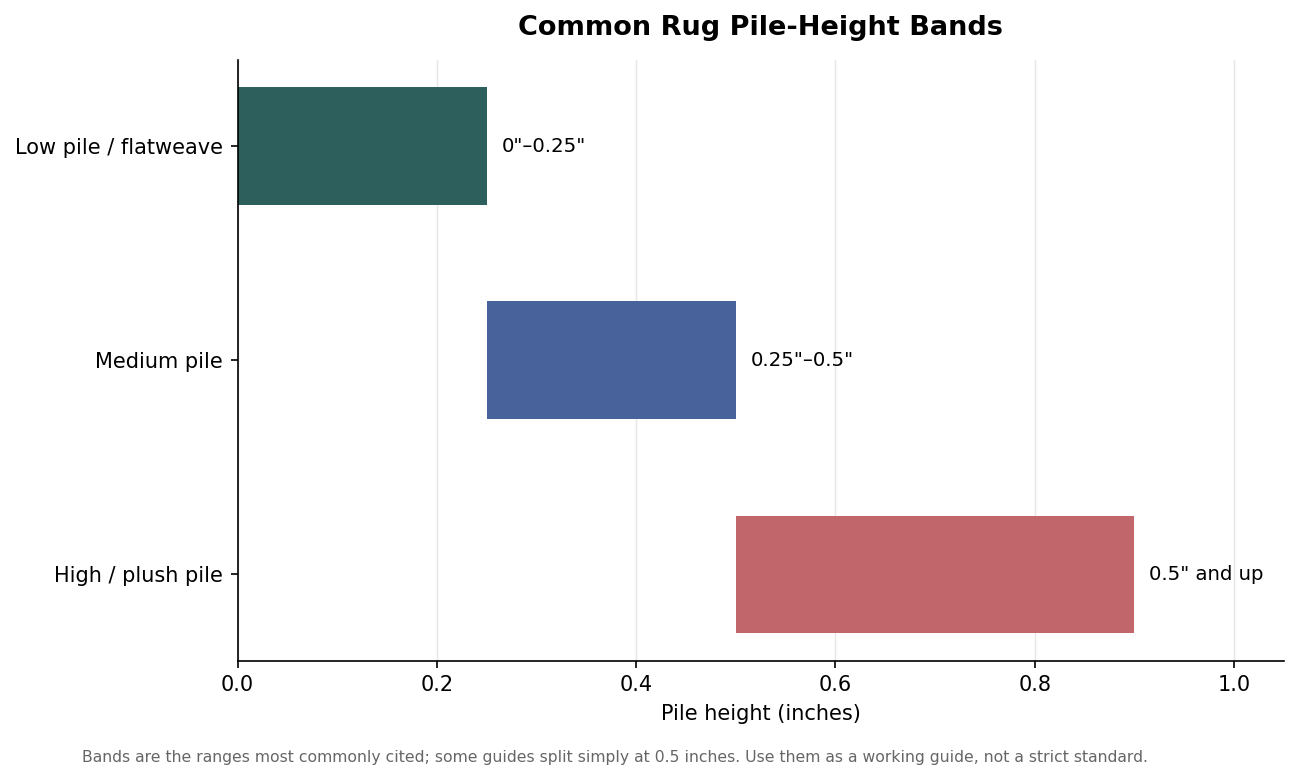
The reason traffic decides this is mechanical. Tall fibers crush under repeated footfall and trap grit down at the base where a vacuum struggles to reach, so a plush rug in a hallway looks tired quickly and is harder to clean. A low pile has nowhere for dirt to hide, resists crushing, and vacuums clean in a pass. That is why hallways, entries, kitchens, and dining rooms almost always want low pile, while a bedroom, where the traffic is light and bare feet appreciate the cushioning, is the natural home for plush. Dining rooms deserve a special mention: chairs slide in and out over the same spots constantly, and a low pile lets them move without catching or wearing a track.
Construction is what actually survives the wear
Pile height tells you how a rug feels; construction tells you how long it lasts. Four methods cover most custom orders, and they separate cleanly by durability. Flatweave rugs have no pile to crush, are often reversible, and handle heavy foot traffic in entries and kitchens well; because they are thin and usually have no backing, they benefit from a non-slip pad underneath. Machine-woven rugs, typically made from synthetic fibers like nylon, polypropylene, or olefin, are the workhorses of the American market, valued for stain resistance and easy cleaning, with a practical lifespan of around five years or more in high-use spots when cared for. Hand-tufted rugs use a latex-backed canvas construction that feels plush and prices reasonably, but they shed a little at first and are better suited to bedrooms and living rooms than to punishing traffic.
Printed rugs deserve their own note, because they are where custom design shines. Dye-sublimation and direct printing lay full-color artwork, photographs, or a logo onto a synthetic pile with a fidelity that woven construction cannot match. The trade-off is that printed rugs tend to be thin and are built around the graphic rather than around maximum durability, so they are ideal for branding, events, and rooms where the look leads and the traffic is moderate.
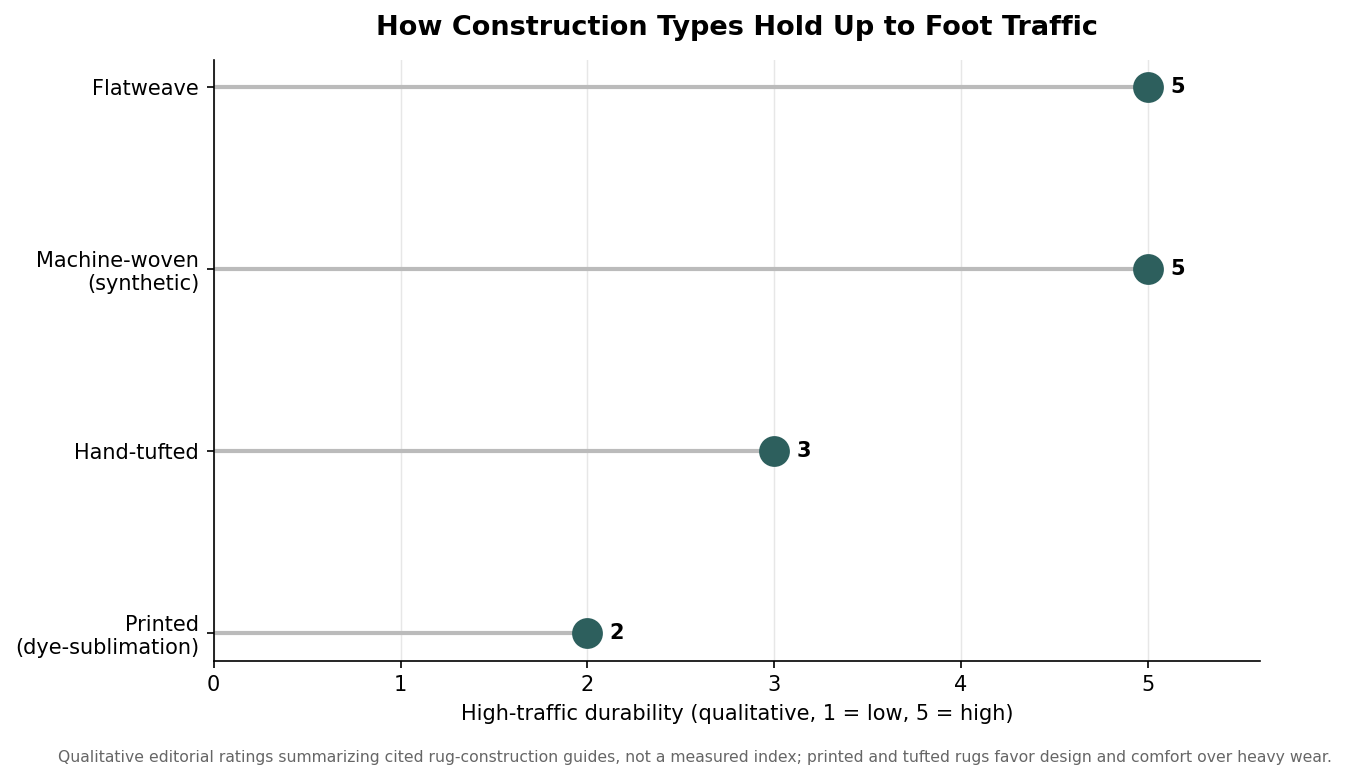
The ratings above are a qualitative summary of how these constructions are described across buying guides, not a laboratory measurement, so read them as direction rather than a scorecard. The useful takeaway is the ordering: flatweave and machine-woven synthetics take heavy traffic in stride, while tufted and printed rugs reward you with comfort or design detail in exchange for gentler placement.
Fiber and design work with the construction, not against it
Within those methods, the face fiber shifts the balance again. Synthetics such as polypropylene and nylon resist stains and moisture, which is why they dominate high-traffic and entry rugs and why they take printed graphics well. Natural fibers like wool feel richer and age gracefully but ask for more care and a gentler location. For a custom printed design, a synthetic pile is usually the right canvas because it holds saturated color and shrugs off spills, and a slightly lower pile keeps fine detail in the artwork from distorting as the fibers lean over time.
Design choices can also hide wear. Busy patterns and mid-tone colors disguise footprints, crumbs, and the occasional stain far better than a solid pale field, which is worth remembering for a rug headed somewhere active. If you love a light, minimal look, put it where it will be admired rather than trafficked, and lean on a low pile and a stain-resistant synthetic to keep it looking clean.
Working from the room to the order
Put the pieces together and the specification writes itself. For an entry, hallway, or kitchen, order low pile in a flatweave or machine-woven synthetic, add a non-slip pad, and choose a pattern that forgives dirt. For a dining room, keep the pile low so chairs glide and cleaning stays easy. For a living room, a medium pile in a durable synthetic balances comfort against the traffic of a shared space. For a bedroom, this is where plush earns its place, and a hand-tufted or high-pile rug rewards bare feet. And when the whole point is a custom graphic, a printed synthetic rug in a lower pile gives you the color and detail you are after, placed somewhere the design leads and the footsteps are moderate. Decide the room first, let it set the pile and construction, and the rug you order will still look right long after the novelty of the design has settled in.